Hunting New Zealand’s Big Game Species
Red stag, Himalayan tahr, chamois and fallow deer:
wild, free-range and hunted in their prime.
Four Species, Each Hunted in Their Prime
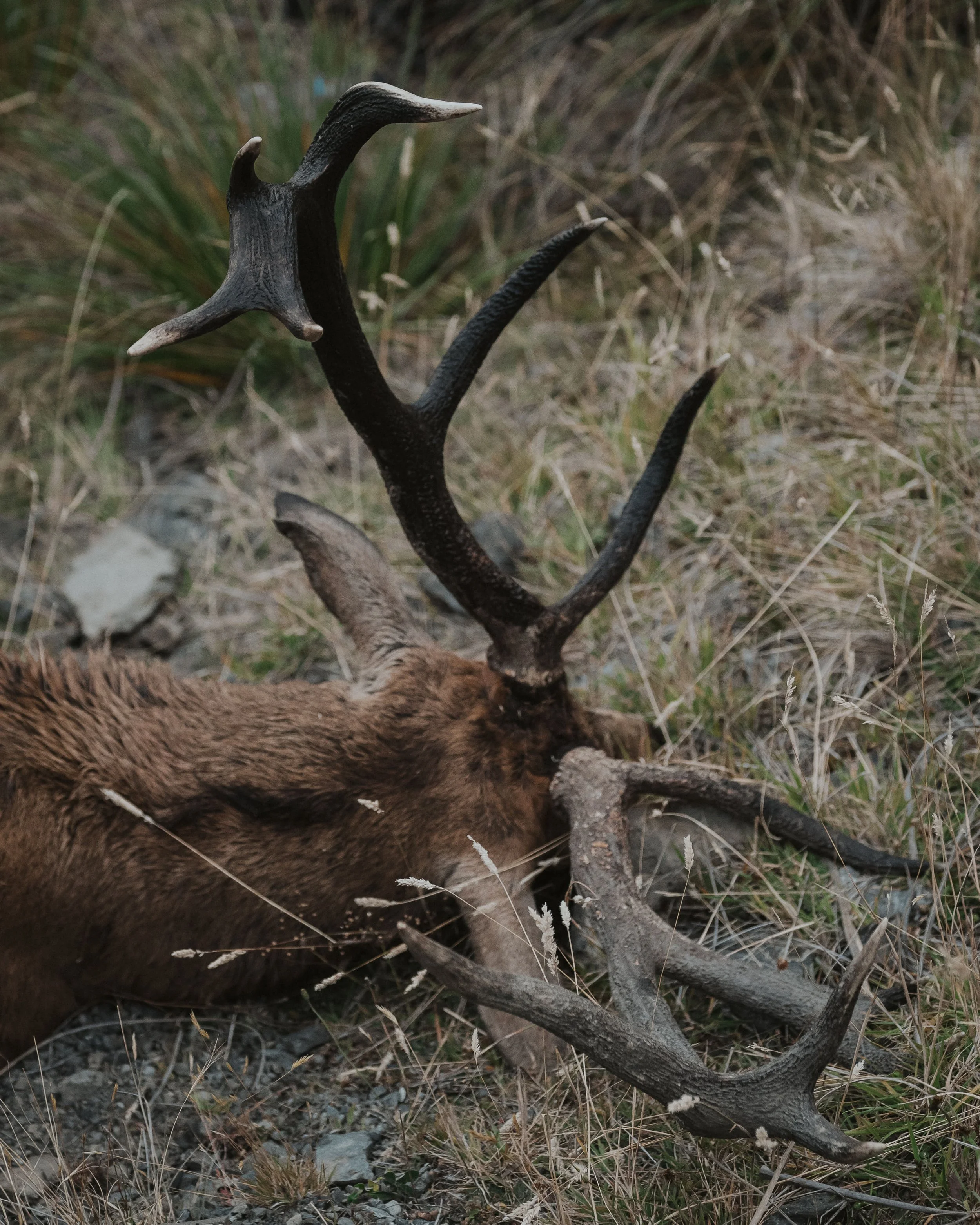
Every animal I hunt is wild and free-range, and each hunt is timed to the rut, when animals are most active.
-
The Roar—New Zealand’s Most Iconic Hunt
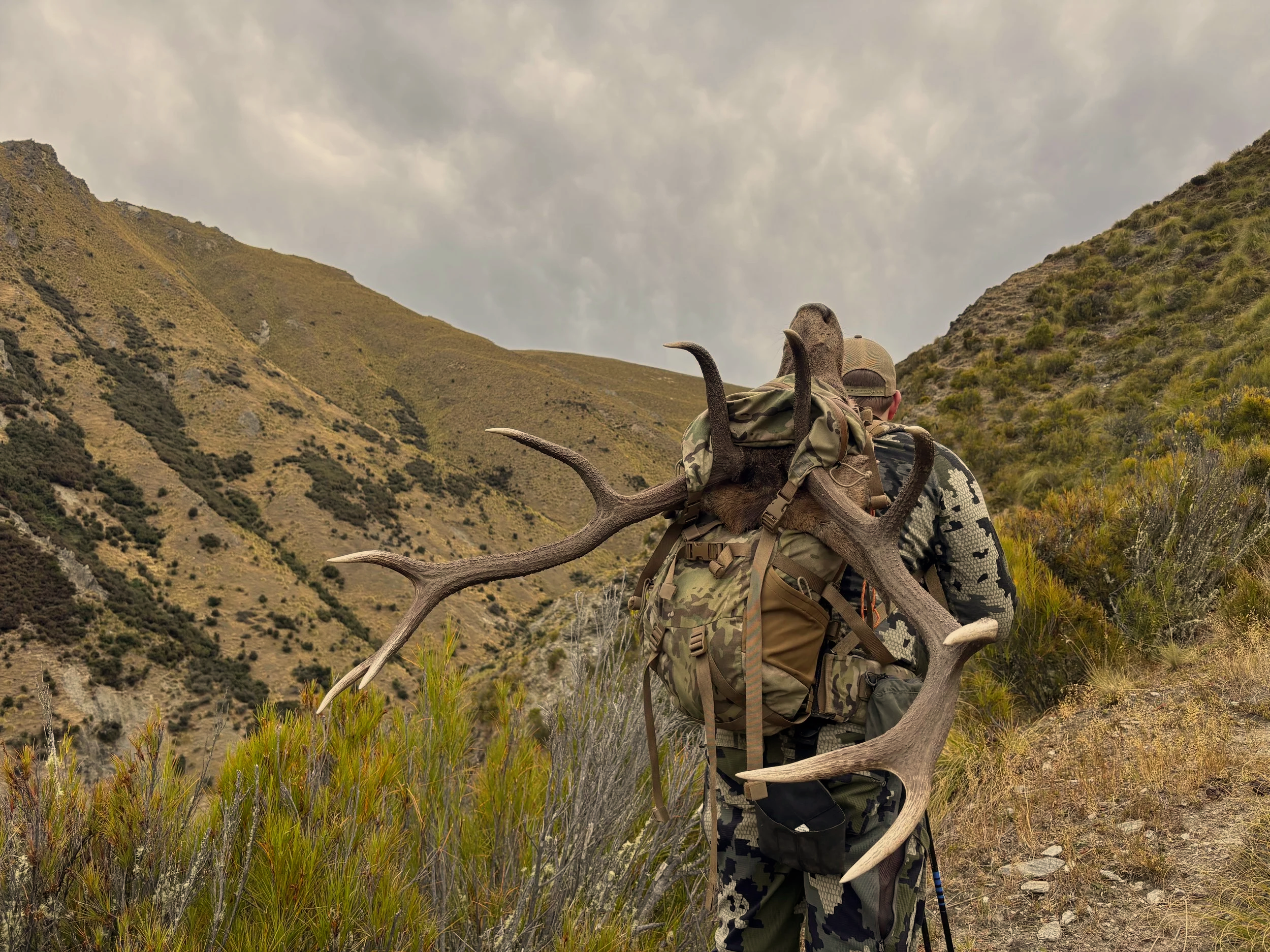
Red deer were brought to New Zealand from Britain in the mid-1800s and are now the country’s best-known big game animal. The rut, known locally as “the roar”, is when stags are vocal, aggressive and on the move. Hearing stags roar across a valley at first light is one of the great experiences in hunting.
Rut: Late March to mid April.
Where: North and South Island.
The hunt: Spot and stalk on high-country stations, using the roar to locate and close in on stags.
Pairs well with: Bull tahr or fallow deer.
-
A Classic Rut Hunt
Fallow deer were introduced in New Zealand the 1860s and are known for their distinctive palmated antlers and sharp awareness. During the rut, bucks are active, vocal and defending their territory. Hunting them across varied terrain, from open clearings to dense bush, demands patience and precision.Rut: April to May.
Where: North and South Island.
The hunt: Careful stalking and timing across mixed country.
Pairs well with: Red stag, or as an add-on to any April/May hunt.
-
Bulls in Full Winter Coat
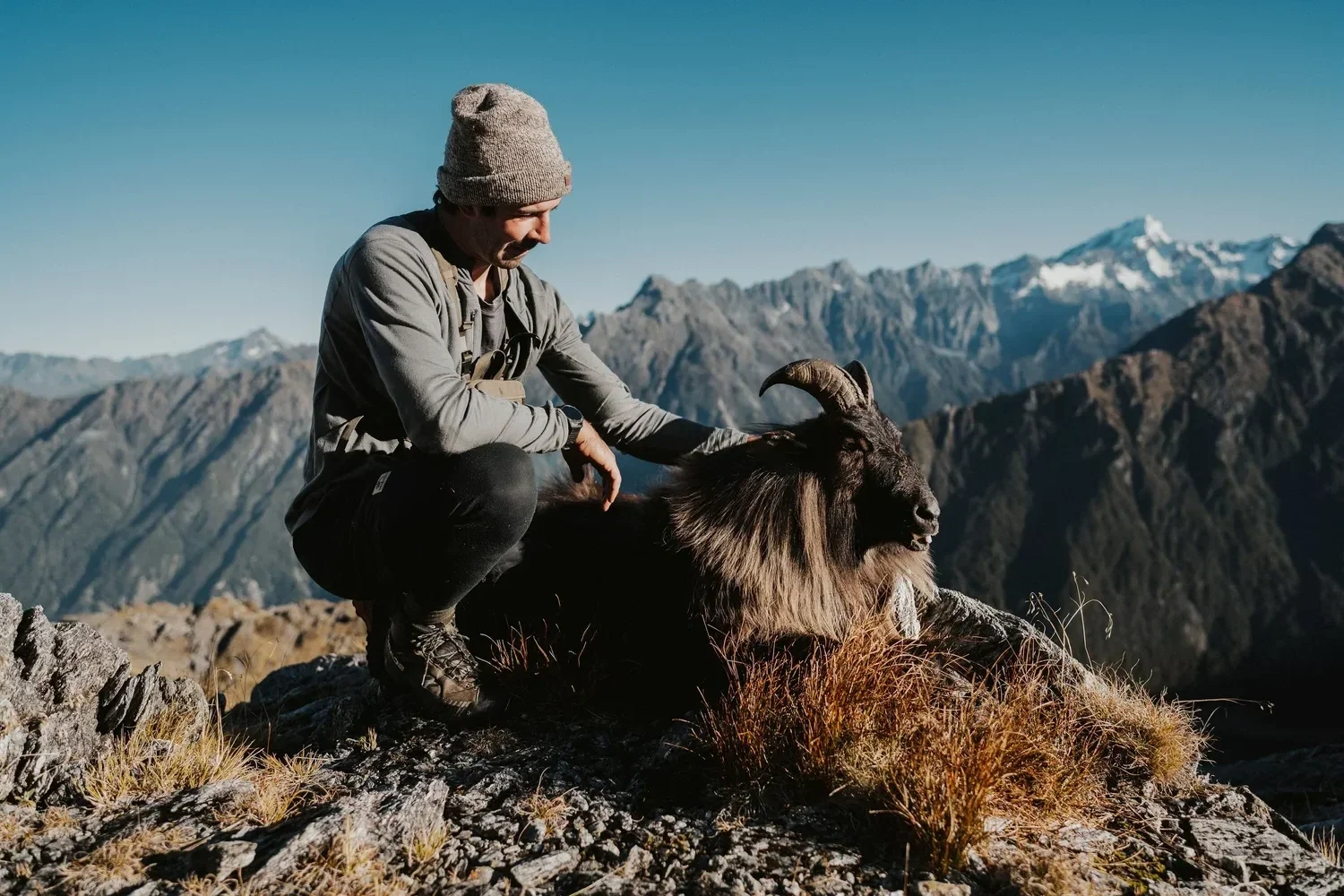
Tahr were introduced from the Himalayas in 1904 and now live in the steep alpine country of the Southern Alps. Bulls are at their best during the rut, when they carry their full winter coat and long, flowing mane. Expect steep country, big views and plenty of time behind the binoculars.
Rut: May to July.
Where: South Island, Southern Alps.
The hunt: Wilderness hunts by helicopter access, or high-country stations by 4WD. Moderately high fitness needed.
Pairs well with: Chamois (the alpine double) or red stag.
-
The Alpine Challenge
Chamois were gifted to New Zealand from Austria in 1907 and have thrived in the rugged tops of the Southern Alps. They’re quick, sharp-eyed and live in some of the steepest country there is, which makes them one of the most rewarding animals to stalk.
Rut: May.
Where: South Island, Southern Alps.
The hunt: Spot and stalk in steep alpine terrain, often from the same base camp as tahr.
Pairs well with: Himalayan tahr (the alpine double).
What to expect. Trip Details
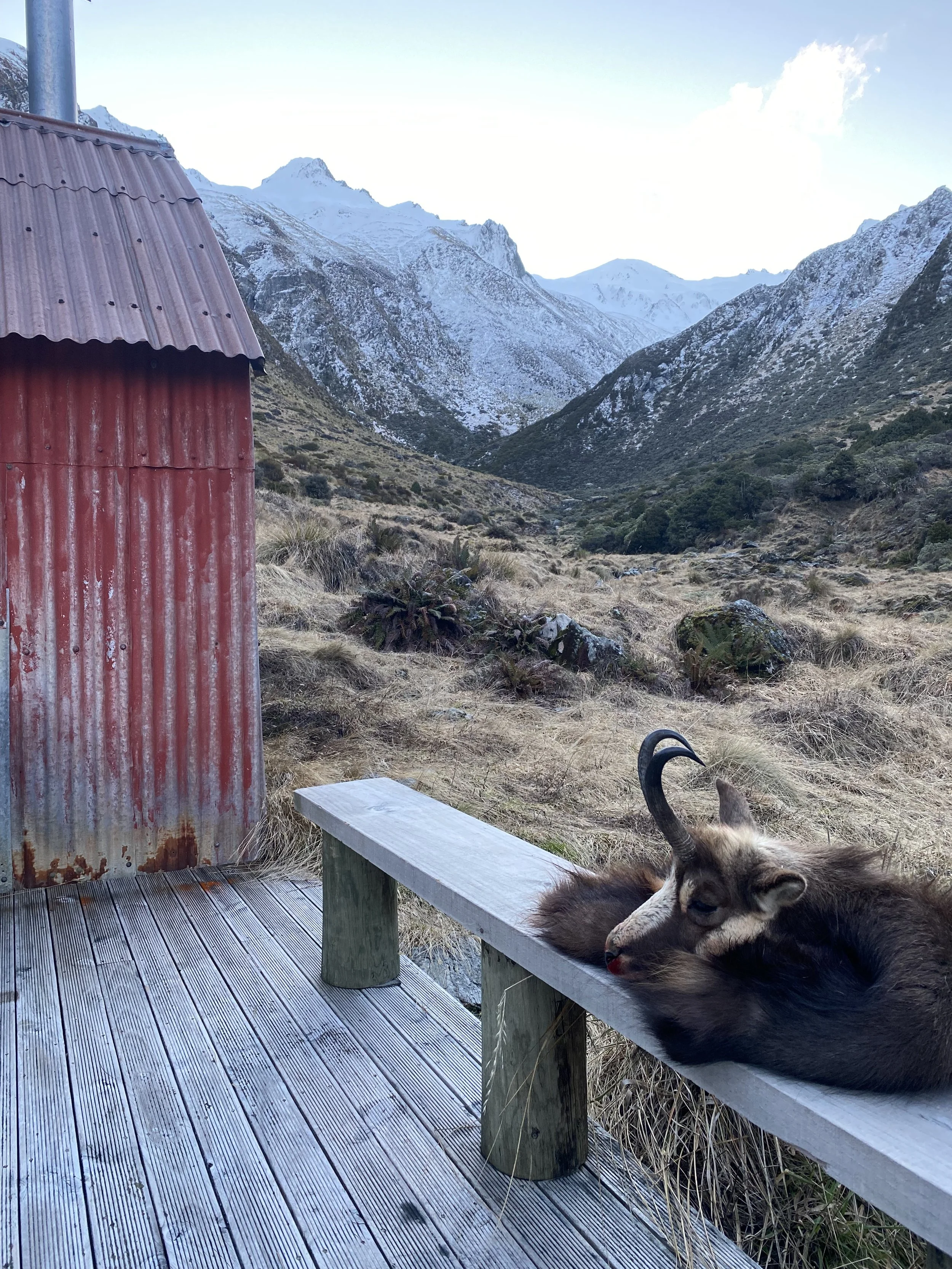
Accommodation
From alpine base camps to huts and lodges, where you stay depends on the country we’re hunting and the comfort you prefer. Higher-end accommodation and dining are available at an additional cost.
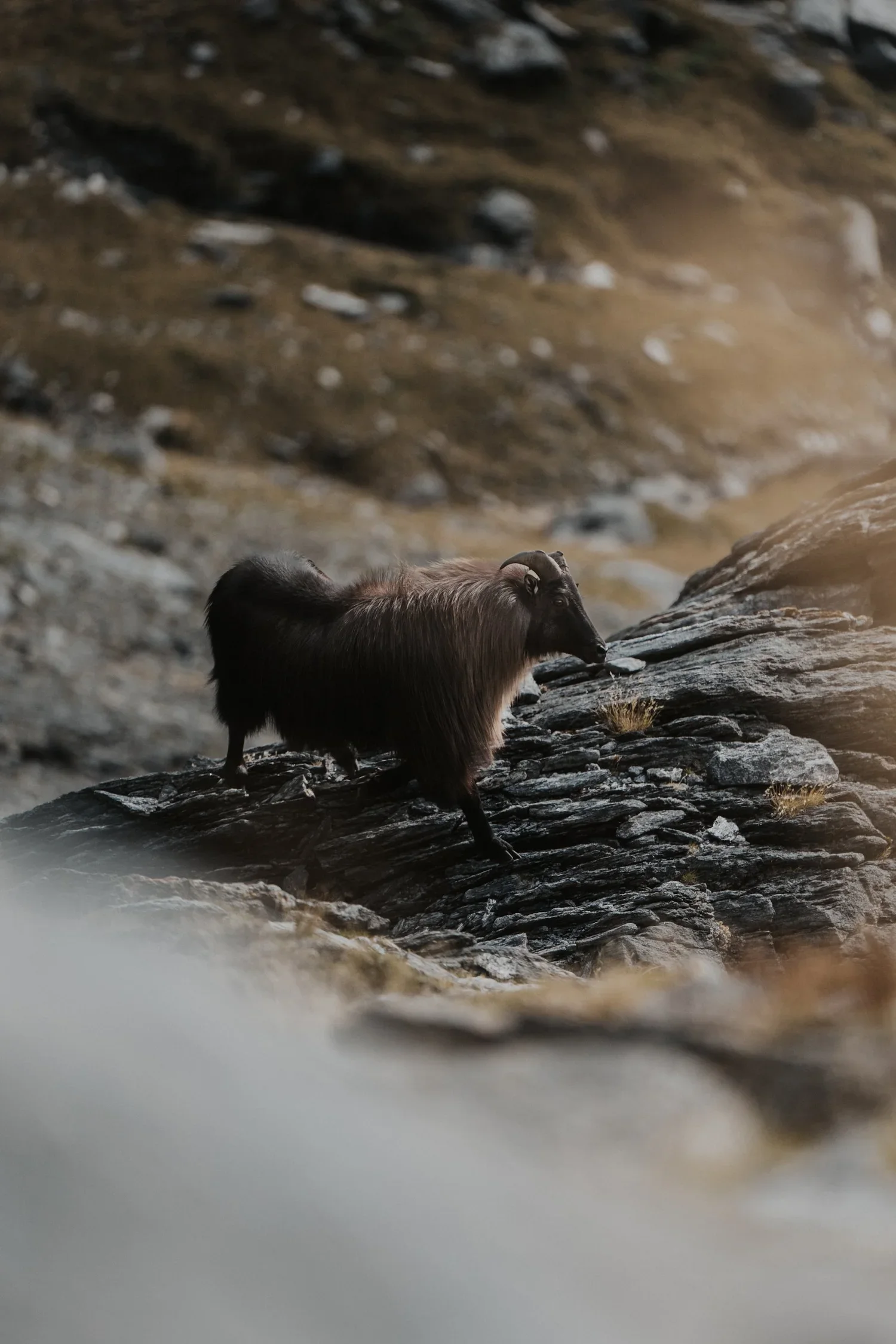
logistics
I’ll pick you up from the airport or from your preferred location. From there I handle the travel, access and hunting gear. I supply quality rifles, so you avoid the long process of bringing your own into New Zealand. All you need to do is focus on the hunt.
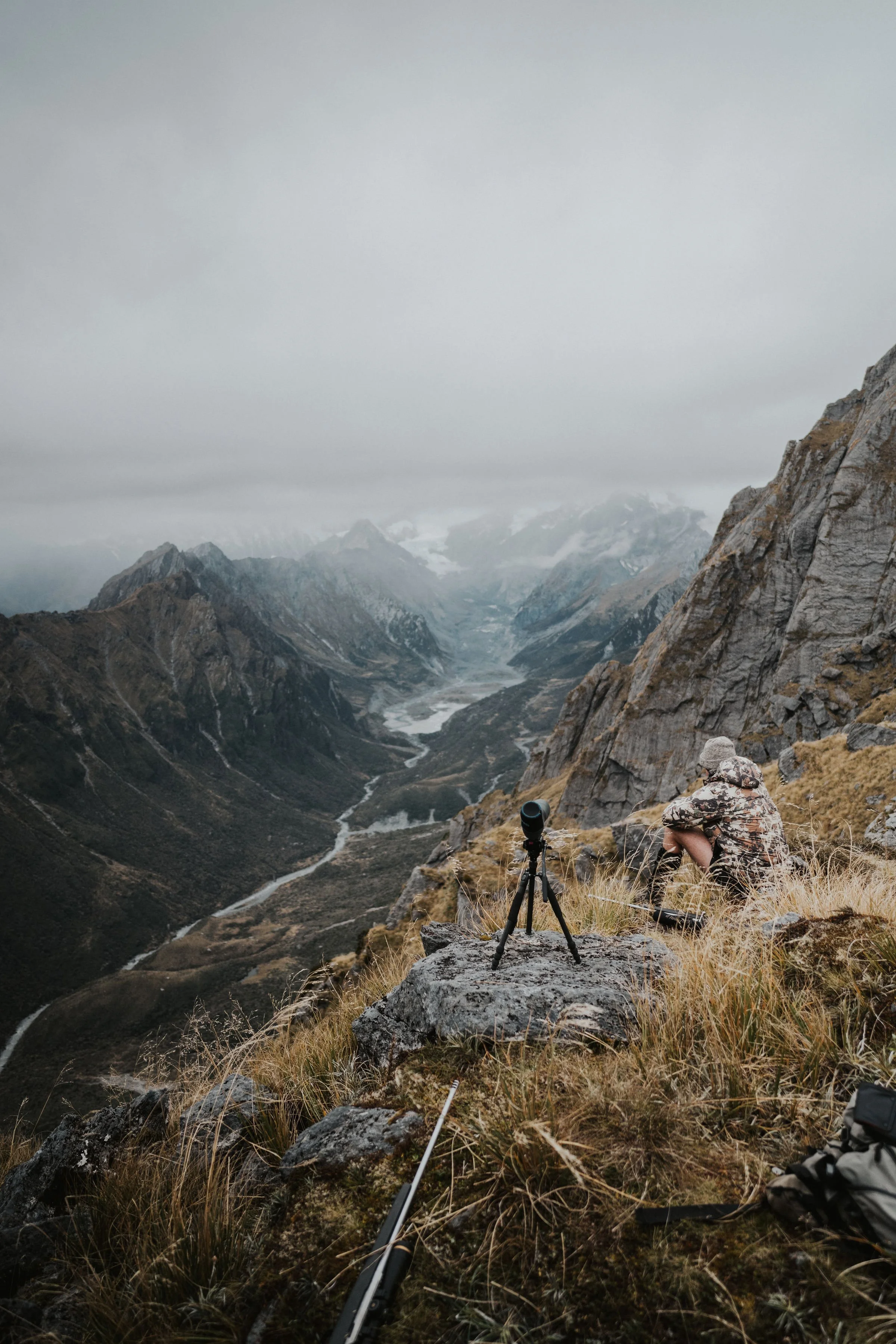
new Zealand Hunting Gear
The right gear goes a long way in New Zealand’s backcountry. Weather changes quickly in the hills, so this list is built around layering, staying dry and travelling light. I supply rifles and optics, so you just need your clothing and personal gear.
Check a detailed gear list below.
-
Clothing
Merino base layers, top and bottom (x2)
Pants (good ventilation is important)
Insulated jacket and pants (pants optional)
Rain jacket and pants (Gore-Tex or similar)
Short-sleeve active layer
Warm, waterproof gloves
Woollen hat and sun hat
Gaiters
Underwear and socks (one active set, one camp set)
Gear
Pack (minimum 70 L)
Pack rain cover
Mountain-capable boots
Sleeping bag (rated to -10°C / 14°F)
Insulated sleeping pad
Dry bags
Binoculars
Trekking poles (optional)
Headlamp and spare batteries
Two water bottles
Light camp shoes (optional)
Cutlery: fork, spoon and cup*
Toiletries and personal medication
*I supply all the cookware, so you only need your own cutlery and cup. It’s the one thing hunters forget most often.
READY TO PLAN YOUR HUNT?